Editor’s note: The Leadership Ledger is a monthly roundup of some of the most noteworthy college leadership changes nationwide.
In a month of tricks and treats, colleges across the U.S. got their share of both.
Two public university systems, in Georgia and Wisconsin, announced new leaders following much-discussed departures earlier this year. Conversely, two private universities saw their president abruptly resign in October, with one providing little insight into what prompted the leadership change.
From Texas to Wisconsin, we’re rounding up some of last month’s biggest leadership changes below.
President: Thomas Fanning
Institution: University System of Georgia
Coming or going? Coming
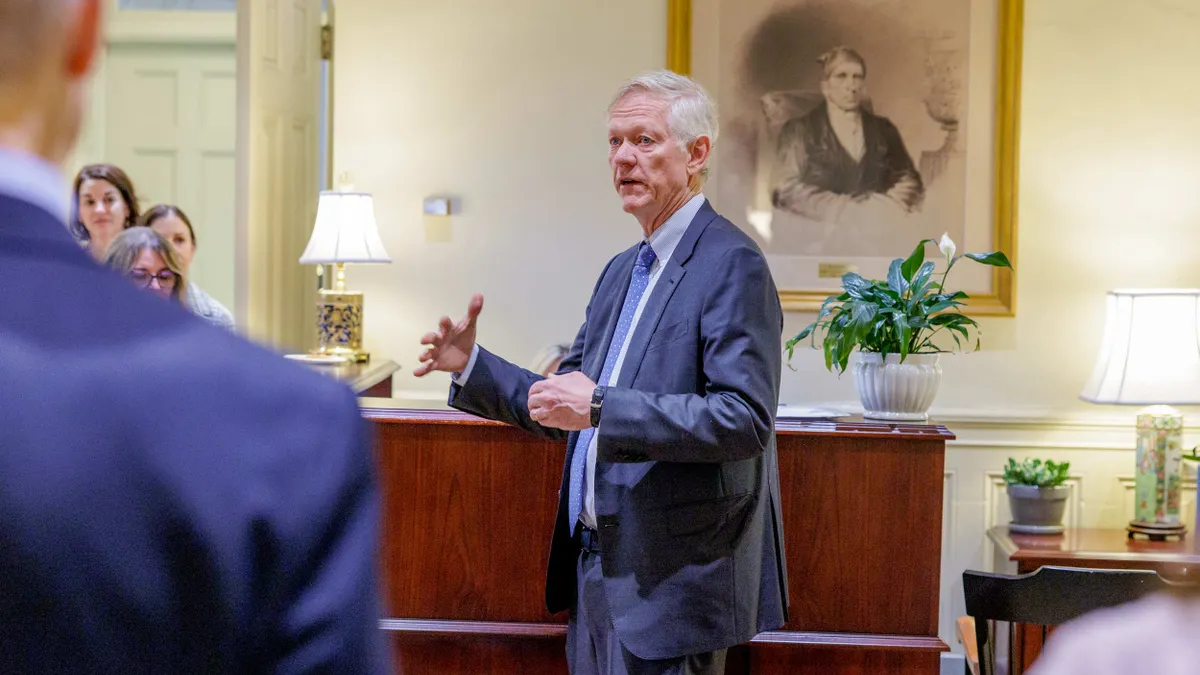
The University System of Georgia’s governing board on Oct. 1 confirmed former utility executive Thomas Fanning as its next chancellor. Fanning, the sole finalist for the job, is to take office Jan. 1, replacing Sonny Perdue. This will be the first position in higher education for Fanning, who spent more than 40 years in leadership positions at Southern Co. before retiring in 2023.
USG has a history of hiring leaders from outside of academia. Perdue, who announced his intention to retire in April, had a decades-long political career prior to taking the helm of USG in 2022. During his four-year tenure, he installed 14 presidents across the system’s 25 colleges, and USG’s fall enrollment repeatedly broke records. Perdue’s last day is set for Dec. 31.
President: Walter Iwanenko
Institution: Gannon University
Coming or going? Going
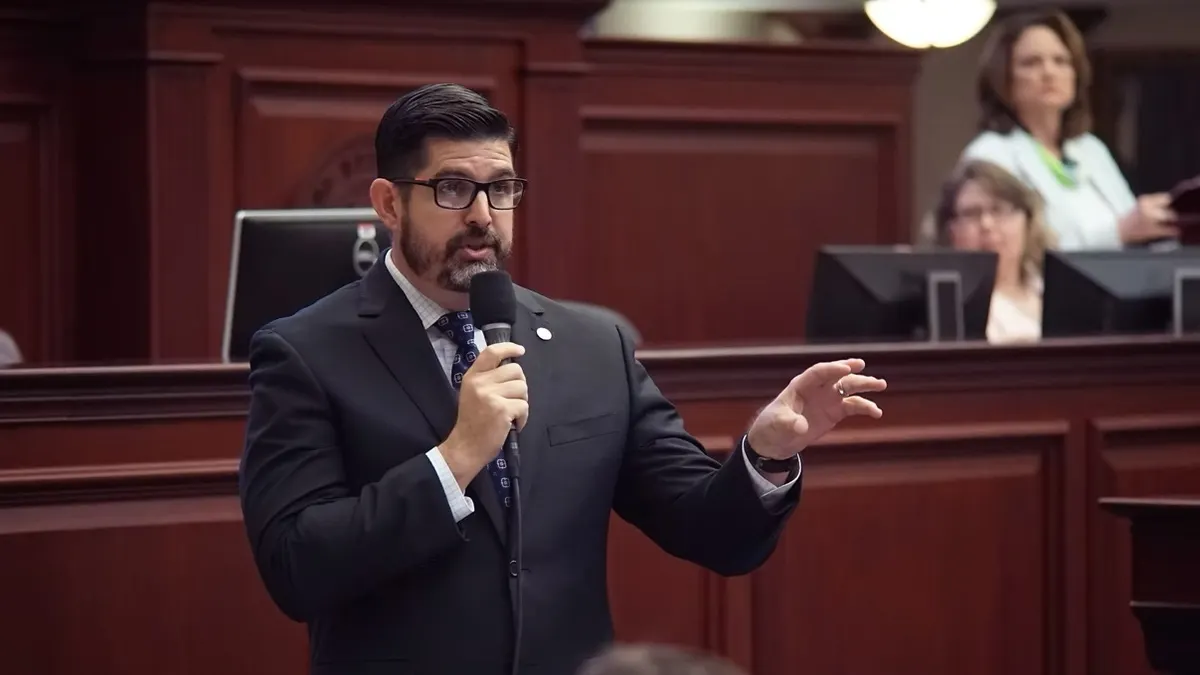
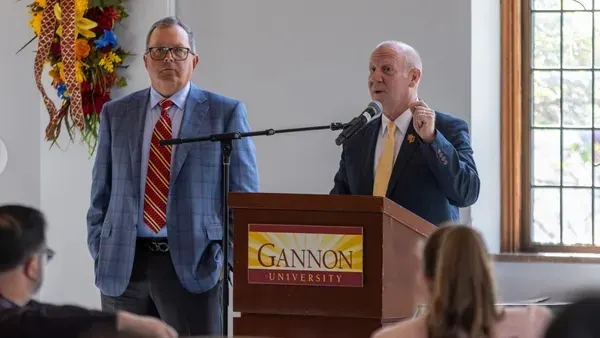
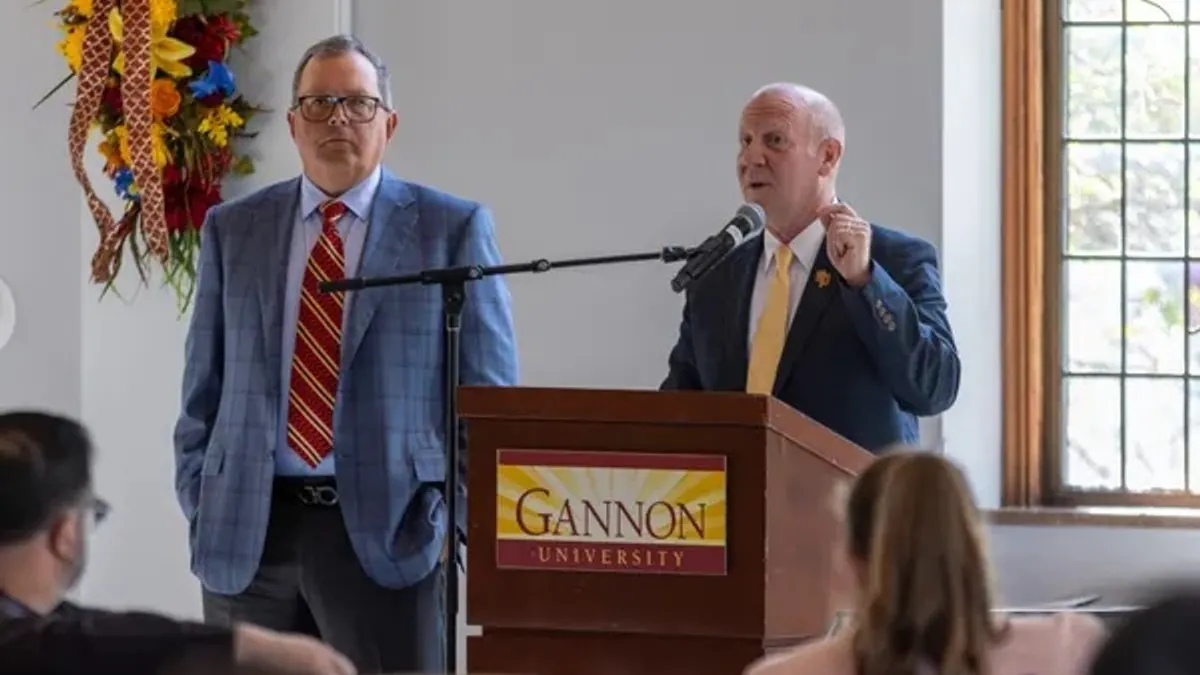
Walter Iwanenko stepped down as president of Gannon University, effective Oct. 8, the Pennsylvania institution announced the next day.
Gannon is in the process of acquiring nearby Ursuline College, a restructuring that Iwanenko said he committed to seeing the university through. The merger of the two Catholic institutions is expected to be complete by mid-December.
“Now that it is nearly done, I am stepping down to pursue other opportunities,” he said in a statement.
Gannon’s board chose Keith Taylor, who previously led the university for over a decade, to replace Iwanenko starting Oct. 8. It indicated Taylor’s appointment would not be a long-term one, saying he would assist the university “through this transition and the search for a new permanent president.”
Shortly after he took office, Taylor said Gannon is preparing for a reduction in force amid a sharp decline in enrollment and a broader institutional restructuring, Erie News Now reported.
President: Daniel Pullin
Institution: Texas Christian University
Coming or going? Going
Texas Christian University Chancellor Daniel Pullin abruptly resigned on Oct. 22 after less than two years in the role. The announcement came via a campus email sent by Victor Boschini, who headed TCU for over two decades before departing in 2025. Boschini is once again leading TCU after its board appointed him to replace Pullin.
The email did not give a reason for Pullin’s departure.
President: Amy Parsons
Institution: Colorado State University
Coming or going? Going
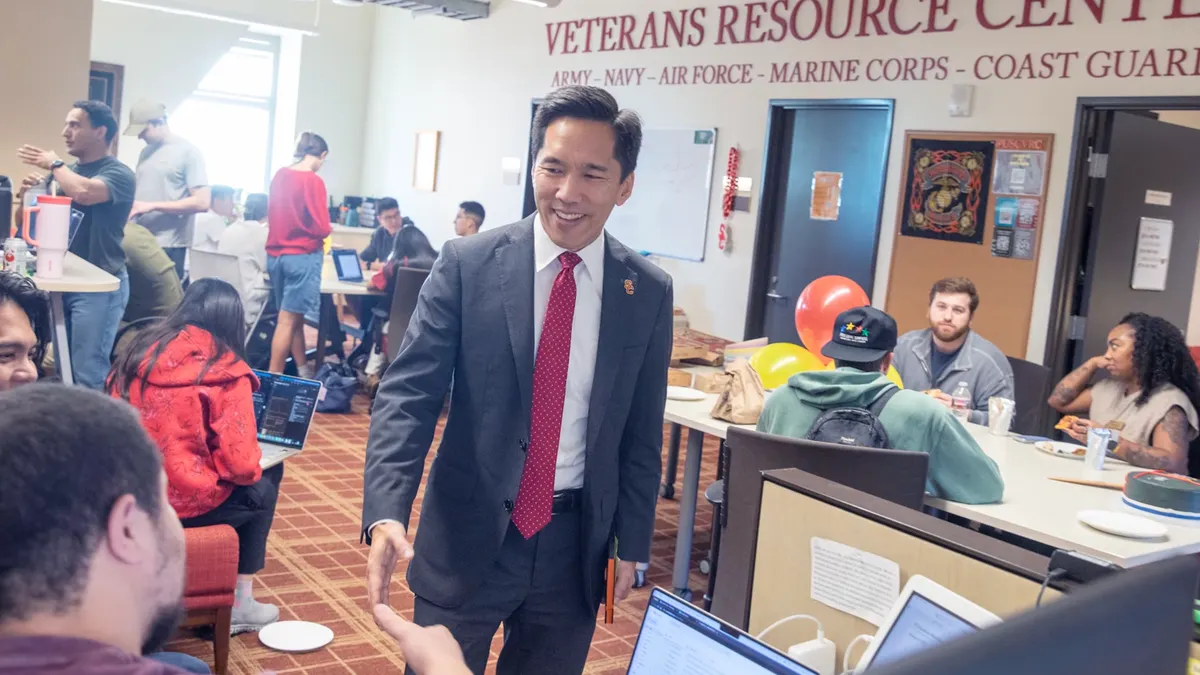
Amy Parsons will step down as president of Colorado State University, she said in an Oct. 28 campus letter. Her last day will be Dec. 31.
Parsons, an alumna of CSU, became the public institution's president in 2023 after holding senior leadership positions within the CSU system for nearly two decades.
In an Oct. 28 statement, CSU System Chancellor Tony Frank touted the university’s improved national visibility and the student access initiatives established during Parsons’ tenure. He said the search for her successor will begin in the spring and be led by Rico Munn, the incoming CSU system chancellor who is set to start in mid-2027. Longtime faculty member Rick Miranda, who served as CSU’s interim president in 2022 prior to Parsons' hiring, will again be the university’s acting leader beginning in January.
Like many public institutions, CSU is in a tough place financially amid underwhelming state support. Colorado’s fiscal 2027 budget kept higher education funding flat while capping public colleges’ ability to raise tuition for in-state students at 3.5%. CSU is set to cut some $39 million from its budget next year through staff layoffs and other measures.
President: Marvin Krislov
Institution: Bard College
Coming or going? Coming
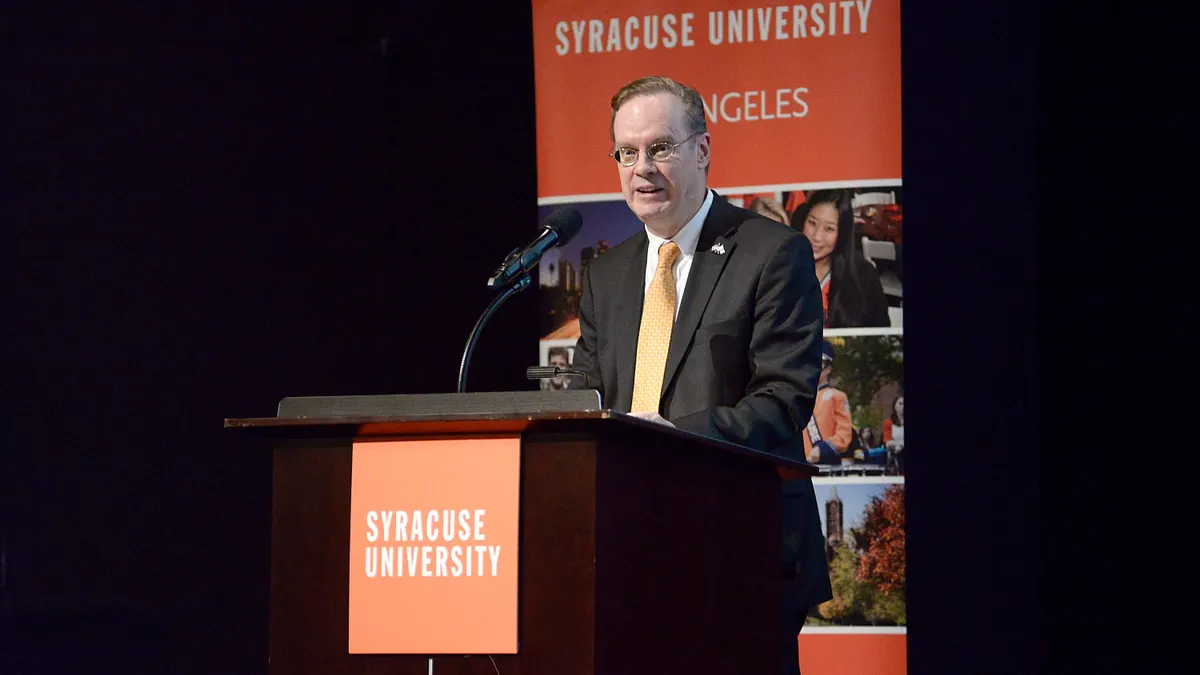
Marvin Krislov will be the next president of Bard College, the private New York institution’s board said on Oct. 29. Krislov currently leads Pace University and previously held the presidency at Oberlin College. Following a unanimous vote, Bard’s board signed Krislov to a three-year contract which will begin July 1.
The announcement comes as Bard continues to navigate leadership challenges and unwanted public attention.
Leon Botstein resigned as Bard president this summer over intense scrutiny focused on his professional relationship with Jeffrey Epstein and Epstein’s resulting involvement with Bard. Botstein had led the campus for five decades.
Jonathan Becker, a longtime Bard senior administrator, has served as acting president in the interim.
Initially, Botstein continued to hold positions at Bard, including a professorship. But he stepped down from those roles this month after Democratic lawmakers made fresh allegations that he may have directly participated in Epstein’s abuse and exploitation of his victims. Botstein denies those allegations.
President: Tonjanita Johnson
Institution: Universities of Wisconsin
Coming or going? Coming
Tonjanita Johnson will be the next president of the Universities of Wisconsin, following a unanimous vote from the system’s board on Oct. 30. Johnson, a senior administrator with the University of Alabama system, will take office at the start of the new year.
Johnson will be the system’s first permanent leader since trustees ousted its last president, Jay Rothman, in April.
Rothman had said previously that the board had given him an ultimatum — resign or retire by the end of the calendar year, or face termination by the board. He said he declined to step down because the board did not give him a reason for the request. The president of the board disputed this account, saying at the time that Rothman “was not without notice, nor was this process sudden.”