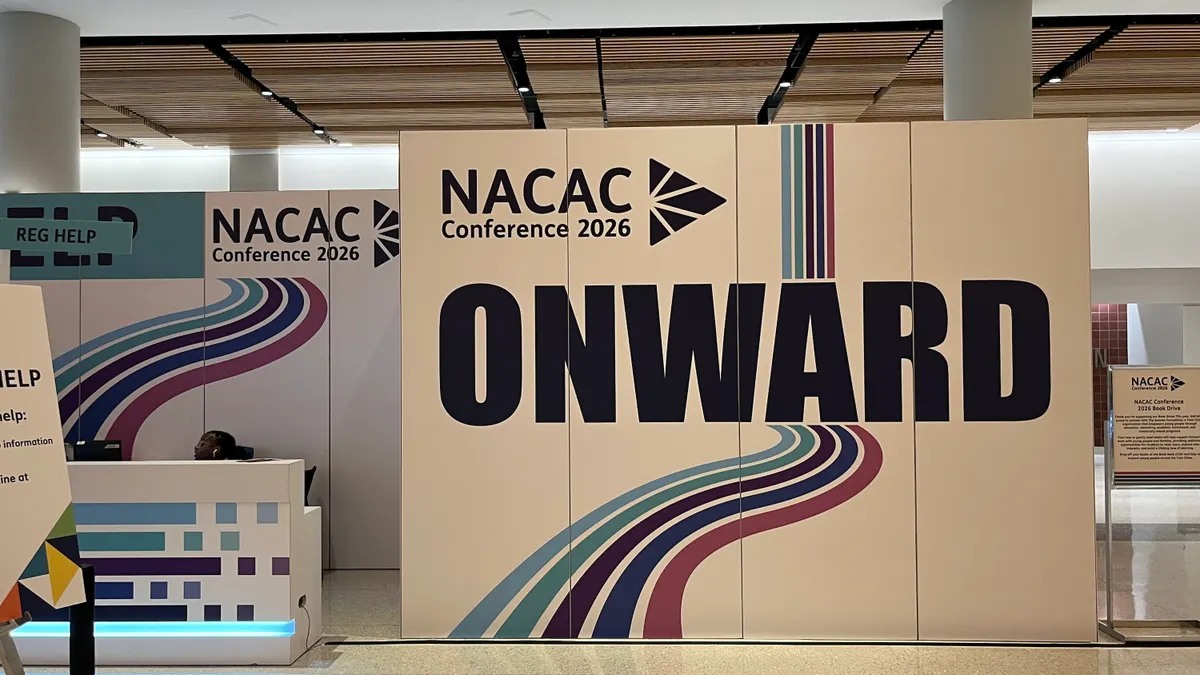
MINNEAPOLIS — Women of color who work in college admissions hold a uniquely challenging position, according to Bridget Adiukwu, Rice University’s deputy director for access and institutional excellence.
"We are occupying a very highly visible and scrutinized role a lot of times," Adiukwu told attendees at this year's annual National Association for College Admission Counseling conference.
Admissions work requires an employee to consider both a college's branding and the access it seeks to provide students to higher education, she said. On top of that, she added, women of color must navigate the racial politics that pervade the workplace.
Colleges often see their lowest employee retention rates among this group, according to panelists. But if they attribute the departures of these women to individual circumstances — a product of a poor cultural fit, for example — rather than as part of a broader pattern of burnout, they do themselves and the women of color they employ a disservice, panelists said during a Thursday session.
What's pushing women of color out of admissions
When a woman of color is first being interviewed for a position, college hiring managers often express a desire for collaboration and innovation to create a more inclusive workplace, according to Tela McEwen Herring, director of strategic outreach and recruitment at the University of Tennessee, Knoxville.
That excitement from leadership can carry into her hiring and the early days of her new job, Herring said. But this honeymoon period, as panelists described it, often doesn't last more than a few months.
If a new hire calls attention to race- or gender-related issues she observes or experiences, the reception she receives can shift, Herring said, referencing a tool depicting this cycle from the Centre for Community Organizations. Supervisors may respond by saying she is overthinking the issue or "perhaps interpreting this situation differently because of her own experiences," Herring said.
After a while, the new hire may come to understand that her colleagues "weren't asking her to solve the problem anymore — they were asking her to stop talking about it," Herring said.
This cycle of experiencing and identifying institutional issues only to be shut down can prompt burnout and attrition among women of color.
Dispelling the monolith myth
Panelists also stressed that women of color are not a monolith and may not experience the same treatment. Black women, in particular, face negative stereotypes of being aggressive or angry, while Asian-American women face what Missy Bondy Hasselback, associate director of recruitment and admission at the University of Dayton, described as "the bamboo ceiling."
Asian-American women, along with those who are Native Hawaiian and Pacific Islander, are often overlooked for leadership positions and pigeonholed into technical or managerial support roles, in part because of the racist stereotype that they are passive or quiet, she said.
And women in these groups are often seen as "uniformly successful," according to Hasselback.
As such, college leaders can mistakenly believe these women don't need institutional support, "masking real needs for mentorship and development while playing them against other marginalized groups," she said.
Addressing institutional challenges
Adiukwu told conference attendees that one way to support women of color is to demystify the path toward professional advancement.
In higher education, there can often be an unstated expectation that employees take on work outside of their job descriptions if they're interested in managerial or leadership roles, Adiukwu said.
"It might not be a job responsibility, but you know that that's something that can help them succeed," she said, giving the example of joining a committee to gain personal and professional visibility.
If managers make that unspoken expectation clear, it can help support women of color's professional development and build retention at their institutions, Adiukwu said.
On an institutional level, it should not fall solely on the women of color in the workplace to identify and rectify racial inequity, panelists said.
Likewise, the work behind cultural programming needs to be "recognized, compensated and distributed fairly," Hasselback said.
White admissions officials should also be open to the feedback their colleagues of color provide, rather than shying away from uncomfortable discussions.
"We want to listen actively and avoid centering our own discomfort in conversations about race," Hasselback said. "Be comfortable in the uncomfortable, get used to that because that is important."
That can look like speaking up on behalf of colleagues of color if their ideas are being co-opted or dismissed out of hand. It can also include nominating or sponsoring qualified women of color for high-visibility jobs or research grants, according to the Thursday presentation.
Adiukwu also highlighted the limitations of mentorship programs.
"A lot of times, particularly for women of color, you get told to find a mentor — and you should," Adiukwu said. "But when we are talking about some of these systemic issues, a mentor can only do so much." She advised the women of color in attendance to also seek mentorship outside of their institution for additional perspective.
She also advised managers and administrators to examine performance reviews for elements that could be systemically disadvantageous to women of color, such as evaluating them on their tone or communication style.
"If those aren't really a part of your performance metrics, this should not be the time that they come up," Adiukwu said.
Women of color, especially Black women and even those at the top of their fields, can be perceived as angry or aggressive in the workplace, despite research contradicting that negative stereotype.
Another example of a potentially detrimental metric to include in reviews is participation in socializing outside of work.
"It shouldn't hurt you because you didn't want to go to happy hour with your coworkers," Adiukwu said. "That should not impact how successful I can be at this institution or in this role when I know that I'm showing up and doing my job."